30
Jun
Younger turtles do tend to have softer shells and it may take years for a turtle to fully develop a strong shell. Shes been perfectly healthy up until now.
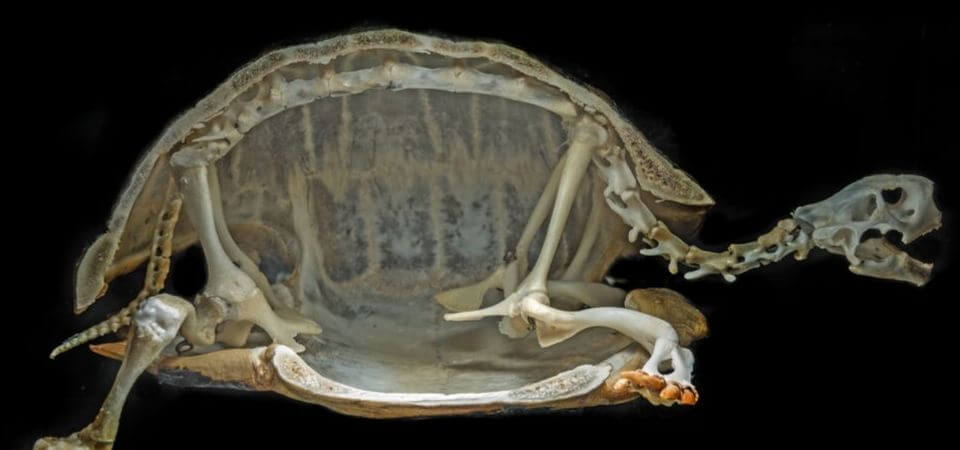
Soft shell tortoise shell cut open. Shell pyramiding in an Indian Star tortoise. Soft shell in tortoises. Tortoises need exposure to UV to help prevent developing a soft shell.
Known scientifically as metabolic bone disease MBD this condition is caused by your tortoise receiving an inadequate supply of calcium or an imbalance in the calciumphosphorus ratio. Turtles and tortoises are very prone to infection if kept in dirty conditions and dirty water or rank bedding can soon cause problems to arise. If bacteria is allowed to grow on the surface of the shell it will ultimately lead to shell rot which often appears as pitting soft spots and a generally unkempt or patchy appearance to the shell.
Shell rot requires prompt treatment. Soft shell is also called metabolic bone disease which is due to a deficiency in vitamin D or calcium. Horsefield tortoises need UV light to absorb vitamin D3 which stimulates the uptake and use of calcium in their body.
Inadequate UV light particularly in young Horsefields can cause an imbalance in the calcium-phosphorus ratio. This leads to the development of soft shell. In captivity soft-shelled turtles are known to live for a long time.
They are known to live up to 50 years and possibly longer. At any size soft-shelled turtles can be very aggressive. They can cause a hazard to other living animals inside the tank at a small size while larger sizes can be dangerous for both tankmates and the keeper.
Softshell turtles may be more aquatic than other freshwater turtles but they also need to bask. Basking ensures that the turtle can regulate their body temperature as well as dry their leather shell. As softshell turtles are messy feeders you need to install a powerful filter and pump.
Softshell turtles prefer soft bottom enclosures. This allows them to spend longer periods of time submerged. To do this they open and close their mouths underwater and absorb the oxygen much like in the gills of fish.
Turtle Soup Even though it may sound preposterous to some softshell turtles are a delicacy in some countries and regions. While this activity does not threaten many species some species are more severely. It takes time for the calcium to get reworked and into the system meanwhile a soft shell adds weight stress and is hard on the inside body systems with the loss of structural support.
Be very careful how you handle her too. Once she gets better then cut back on the calcium as that too could end up leading to danger. Any scaliness or cuts on the turtles shell might indicate a turtle that has suffered an injury which could mean it has other less obvious health issues as well.
Moreover its eyes should be clear and free of any mucus or crustiness. The pancake tortoise are extremely different from that of a usual tortoise family. These organisms are recognized by their flexible thin flat shell which is again a rare feature for tortoises.
The shell in pancake tortoises measures approximately 178 centimeters 7 inches in. How Long Does It Take for a Shell Crack to Heal. Turtle and tortoise shells grow at a very slow rate and can take months to heal if not years to properly heal.
The underlying soft tissue injuries usually heal in 2 to 3 weeks where the shell fractures can easily take 4 to 18 months to become fully stable. Wrapping Up Cracked Shell Repair. Tortoise hatchlings shells firm up quite soon after hatching and a soft shell is always an indication of a problem if the tortoise is more than a month or so old.
The exception to this of course is pancake tortoises which have softer shells throughout their lives. Softness in the shell is usually manifested first in the plastron. The Trionychidae are a taxonomic family of a number of turtle genera commonly known as softshell turtles.
The family was erected by Leopold Fitzinger in 1826. Softshells include some of the worlds largest freshwater turtles though many can adapt to living in highly brackish areas. Members of this family occur in Africa Asia and North America with extinct species known.
Deformed legs will also contribute to an uneven gait and the inability of the animal to lift their shells off the ground. Soft or Leathery Shells. Another dead giveaway of MBD amongst tortoises is the presence of a soft shell.
Tortoise shells are supposed to. A tortoises shell is full of nerve endings and they can feel when you touch pet or rub their shell. Some tortoises even seem to enjoy the feeling.
Is a tortoise attached to its shell. The shell is fused with the tortoises spine and ribs. Please dont try to make a tortoise come out of its shell as that can be extremely painful for the animal.
Answer 1 of 4. Softshell syndrome is a major killer of young turtles especially aquatics. Its real name is Metabolic Bone Disease MBD and it is caused by poor diet andor insufficient lighting.
In order to stay alive turtles require a certain amount of calcium in the bloodstream. Turtles and tortoises have a carapace the top or dorsal shell and a plastron the bottom or ventral shell both of which should always be hard unless it is a hatchling turtle or a species of water turtle that always has a soft shell. Both parts of the shell are connected on the side of the body to protect the turtles organs.
To clean a soft shell turtle before cooking first chop off the head leaving as much of the neck as possible and wait 30 minutes for the turtle to bleed out. When the turtle has. I have a marginated tortoise 1year old.
Shes been perfectly healthy up until now. A few days ago I realized she has a bit of a soft shell mainy on her belly but a little up top as well. She is still acting fine and eating normally.
I looked it up and saw it could be a vitamin deficiency so I started giving her reptivite on her food. Younger turtles do tend to have softer shells and it may take years for a turtle to fully develop a strong shell. This mobility does show that the shell is soft but softness at a young age is normal.
However a turtles shell can get too soft. This happens when the turtle has metabolic bone disease. Secondly can shell rot kill turtles.
The shell of a turtle or tortoise is composed of an upper dome-shaped piece called the carapace and a lower plate called the plastron. These two are joined together by bony bridges. In most species except for the soft-shelled turtles the carapace is composed of bony plates overlaid by hard dermal plates.
Using your soft toothbrush and the mild soap brush the shell to remove all dirt algae and broken shell pieces if necessary. Peel off any bits of shell if they can be peeled off as you need to reach the base of the rot to eliminate it. Make the enclosure a closed chamber enclosure.
Read the threads caresheets and closed chamber threads in the sulcata section. Get every that needs changing done asap. For now soak the sick one in warm water with pureed baby food carrots and pedialyte 2 to 3 times a day for 30 minutes keeping water warm always.
Soft Shell Spots. Whenever you see or feel a soft spot on your turtles shell its important to assess the situation and decide whether you think it is normal or not. After all some soft spots can be a sign of advanced Shell Rot and will require veterinary treatment.
Though generally a sign of disease soft shell spots can occasionally be normal.
Previous post
Soft shell turtle fo human foodNext post
Sofag urine smell hydrogen peroxide