
20
Oct
For an example Ill use your average aquarium. The generic name of Water moccasins is derived from the Greek words ancistro hooked and odon tooth and the specific name comes from the Latin piscis fish and voro to eat.
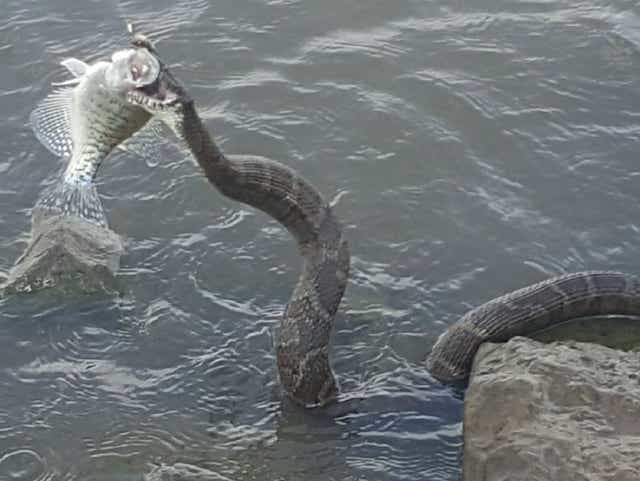
Water moccasin with food. Water moccasins also known as algae eaters eat algae They can grow to be 13 the size of the fish tank thats big. For an example Ill use your average aquarium. The generic name of Water moccasins is derived from the Greek words ancistro hooked and odon tooth and the specific name comes from the Latin piscis fish and voro to eat.
Thus the scientific name translates to hooked-tooth fish-eater. This is the worlds only semiaquatic viper usually found in or near water. Cottonmouth Water Moccasin Hunting For Food - YouTube.
Water Moccasin Food Recipe Uncategorized July 3 2018 Sante Blog 0 Cottonmouth snakes water moccasin in boy reering from water moccasin bite how to cook water moccasin you cottonmouth or water moccasinPics of. Its diet includes mammals birds amphibians fish snakes small turtles and small alligators. Cannibalism has also been reported.
Well yes you can definitely eat a water moccasin. Even though the snake can cause a deadly reaction if its venom spreads. Eating venomous snake meat as such can be tricky.
Most people prefer not to eat these snakes in case the venom remains in. Water Mocassins can reach up to 4 feet long but can grow up to 6 feet long if there is a lot of food available. The color of the Water Moccasin is a dark greenish brown color almost black with a pale belly.
The snake has dark vertical lines by each nostril and a pale snout and chin. Water moccasins use for subduing prey. Wasting venom on anything that is not food may prevent a snake from catching its next meal.
Further the gaped display of the cottony inner-mouth of a water moccasin is not an act of aggression but rather a warning of its toxicityno different than the rattling behavior of rattlesnakes or. Where do you find water moccasins. Like most snakes water moccasins eat live prey with frogs and small fish being their primary food source.
When prey is scarce they have also been known to scavenge food such as small animals they find decaying in the swamp. In any case they hang out in warm wet environments. And yes they can swim.
Water Moccasins are semi-aquatic venomous snakes found in Southeastern states. They rely heavily on fish as a food source. These snakes hibernate in the winter season.
They are not aggressive. Their venom is toxic but it rarely kills a person. Water Moccasin is a very different species from a Water-Snake.
Also in the food web the water moccasin is getting energy from the salamander. This is occurring because the water moccasin is eating the salamander. In a food web if the arrow is pointed towards an animal the that is the predator and the prey is the other end of the arrow.
A water snakes favorite food includes catfish and bullfrogs. Yellow-bellied water snakes can easily distinguish themselves as dark-colored water moccasins. Cottonmouth snakes have vertical pupils in their eyes.
They are surprisingly unsuccessful at seizing either live or dead fish under water. They are opportunistic feeders and sometimes eat carrion making them one of the few snakes to do so. Campbell and Lamar 2004 described having seen them feeding on fish heads and viscera that had been thrown into the water from a dock.
Water moccasins have a very big diet and not many enemies. The water moccasin is in the middle of the food chain in its habitat because it eats other animals but other animals feast on it. Since they are omnivores their diet includes other snakes.
The cottonmouth serpent often known as the water moccasin is a poisonous poisonous snake found in southeastern and southern North America. In the north they produce one two or three puncture holes on the skin. However the markings arent always visible.
Water moccasins may grow up to 6 ft 2 m long and have the following characteristics. Thick bodied keeled scales. Bold and complex pattern on the belly.
Usually found in and near wetlands but can overwinter in upland dens. Erroneously called moccasin Close look-alikes. Almost any other species but especially Timber rattlesnake has a rattle and Copperhead bright redpink eyes orangepink body.
Water moccasin would normally consume whatever their surrounding has to provide. Most of their diet would include frogs and fish. Small turtles small alligators snakes birds and amphibians are part of their diet.
P1 1 p1 1 Water Moccasin. First time I saw one actually swimming in the water. Probably looking for food.
A feared member of the snake family is the water moccasin also called cottonmouth. A poisonous water snake the water moccasin is a predator but a few animals eat juvenile snakes including raccoons opossum hawks owls egrets and snapping turtles. However human beings are the greatest threat.
They usually depend on adequate conditions of environment. The food also has to be in favourable amounts. These snakes grow very fast and at three years of age a female id capable of reproducing.
Mating occurs during the summer since it is warm. The Water Moccasin is usually not aggressive unless provoked. Some people falsely believe the water moccasins belly is yellow because of what it eats frogs toads and other amphibians and that their skin will also turn this color if they eat these foods.
In reality it is the sulfur in these animals that turns their skins yellow. Water Moccasins are related to the Copperhead snake. Unfortunately even the harmless water snakes that occupy the same habitat are often shot chopped to pieces or dispatched by other methods because they resemble water moccasins.
Even though many people will tell you how dangerous cottonmouths are we have found that these snakes will only bite for protection and food acquisition.
Previous post
Water related pet namesNext post
Water in pet lungs